

University studies ignited our passion for science.
At university, interest in aviation and space became a need to understand technology more deeply, experiment and work on problems that do not have simple answers. During our academic path we took part in interdisciplinary student project and research teams — from complete space mission concepts, through material research on real ESA hardware, to future habitat safety systems.
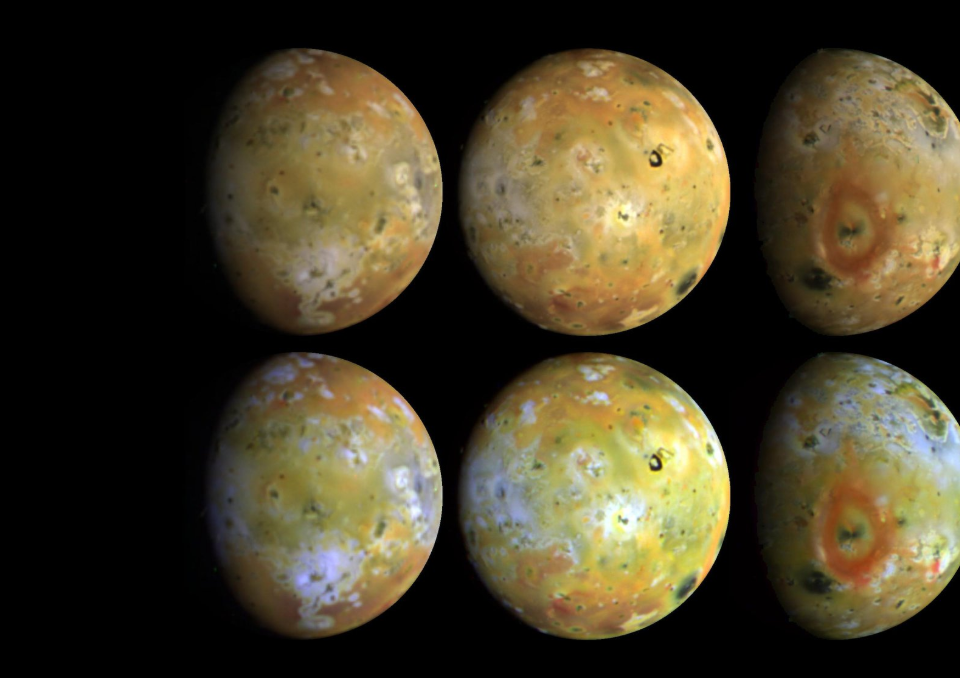
IFESTOS — Io–Jupiter mission
A dedicated mission concept for studying the coupled system of Io, the plasma torus and Jupiter’s inner magnetosphere.
See the project →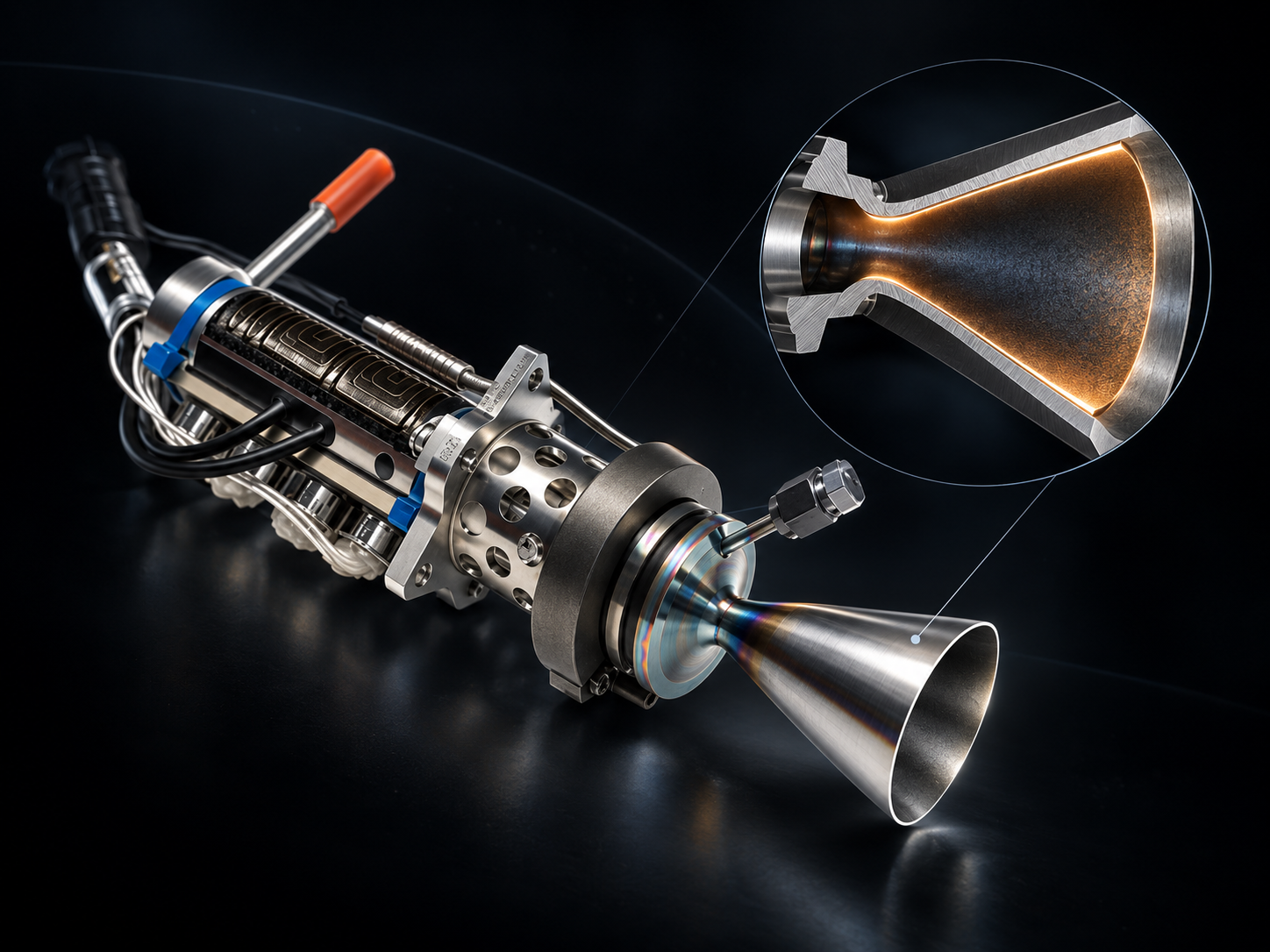
Coatings for 2N thrusters
Assessment and development of diffusion high-temperature coatings for small thrust chambers.
See the project →Extraterrestrial habitat
Interdisciplinary design and safety of quarantine zones in an off-world environment.
See the project → NASA / Jet Propulsion Laboratory · Caltech
Image source: Galileo mission materials released by JPL.
IFESTOS — a science mission to the coupled Io–Jupiter system.
This mission was created during an elite event organised in cooperation with the European Space Agency for 50 students from Europe and Canada. The international team that included Michał Pietras developed IFESTOS as a complete mission concept for the coupled Io–Jupiter system.
The science case focused on the full chain of processes linking Io’s volcanic activity with its exosphere and ionosphere, the formation of the plasma torus and the transport of matter and energy in Jupiter’s inner magnetosphere.
The observation strategy combined repeated close flybys of Io, in-situ measurements during plasma torus crossings and global mapping of the magnetic environment. Michał Pietras was a member of the project team and was responsible for the propulsion area.
High-temperature coatings for 2N thrusters — research on real ESA hardware.
The project focused on developing a repeatable, non-destructive method for evaluating diffusion silicide coating thickness on internal surfaces of small 2N thrust chambers, and on improving deposition efficiency.
The work was carried out under prof. Grzegorz Moskal and validated on real 2N thrust chambers delivered by ESA ESTEC. Michał Pietras and Bruno Gładysz participated as members of a student research team.
Research context — Silesian University of Technology publication →Extraterrestrial habitat — design and safety of quarantine zones.
An interdisciplinary Silesian University of Technology project analysed the quarantine zone as an autonomous, hermetic subsystem of a future off-world habitat. Isolation had to be treated not as ordinary zoning, but as a controlled environmental architecture capable of reducing cross-contamination risk and maintaining operation with limited resources.
The engineering work focused on ECLSS for the isolation zone, including closed gas and fluid loops, water recovery, urine and wastewater treatment, atmosphere regeneration, CO₂ removal, oxygen generation, pressure cascades, independent ventilation, filtration, sterilisation and biological waste management.
Michał Pietras was a member of the interdisciplinary project team.